Washing Cotton Muslin: Why It Gets Softer Over Time
When you open a newborn parcel before your baby arrives, your first instinct is to hold the fabric against your cheek. Expecting parents preparing the nursery or packing the hospital bag often notice something surprising when they unpack freshly sewn four-layer cotton muslin: the fabric feels neat, flat, and perhaps a touch firmer than they pictured.
That initial feel is entirely normal. In our small atelier, every coming-home outfit, blanket, and crib sheet is cut and sewn only after an order is placed. The raw fabric comes straight from the loom and cutting table without artificial softening washes, chemical coatings, or synthetic softeners. Pure cotton fibers need water and gentle motion to open up. Washing cotton muslin reveals its true character, turning a flat weave into the deeply textured, pillowy textile parents love.
Understanding how pure cotton behaves will help you prepare your nursery bedding and coming-home pieces so they are gentle, airy, and ready for your baby's arrival.
Unpacking your parcel: what muslin feels like straight from the atelier
Muslin has been trusted by parents for generations, yet modern manufacturing often masks natural fibers with silicone washes before they reach retail shelves. When a blanket or personalized pillow is cut and sewn by hand upon order, it arrives in its authentic, unwashed state.
Our four-layer cotton muslin is structured with four light, interwoven plies of natural cotton. When laid out flat on a cutting table, the weave is taut and smooth so that measurements remain precise. A blanket cut to 35.4 × 35.4 in (90 × 90 cm) or a play mat measuring 43.3 × 43.3 in (110 × 110 cm) requires balanced tension while being hand-guided through the sewing machine.
Once that fabric meets water, the woven yarns relax, pull slightly inward, and puff out. What felt smooth and structured transforms into a springy, cloud-like texture. If your newly delivered blanket feels a little crisp in your hands, do not worry. It is simply waiting for its first wash.
The science of four-layer cotton muslin and newborn skin
A newborn baby's skin is about five times thinner than an adult's. Because it is delicate and permeable, synthetic fibers can trap heat, hold moisture, and cause friction or irritation against sensitive spots.
This sensitivity is why natural, breathable textiles belong on your baby registry. Four-layer cotton muslin offers distinct advantages across the seasons:
- It breathes naturally: The microscopic gaps between the four woven layers allow body heat to dissipate, preventing overheating during long afternoon naps.
- It is not thin: Unlike single-ply gauze, four-layer muslin has substantial body. Many parents choose it for chilly winter strolls as well as breezy summer mornings.
- It absorbs moisture quickly: Combed cotton and muslin wick milk drips and perspiration away from delicate skin without leaving a damp, cold chill.
- It gentles with age: While synthetic fabrics pill and become coarse after laundering, cotton fibers relax, fluff, and soften every single time they emerge from the water.
When you pack your coming-home set in the hospital bag, knowing that pure cotton sits against your baby's skin brings genuine peace of mind.
How to do the first wash step by step
Because our pieces are sewn after the order and arrive unwashed, we recommend washing every item before its first contact with your baby. The process is gentle, straightforward, and sets the foundation for years of softness.
Follow these simple atelier-tested care steps:
- Wash before first use: Always launder baby textiles before introducing them to the crib or changing table.
- Wash separately: Keep your baby's personalized items away from coarse adult garments, heavy denim, and open Velcro fasteners that could catch on the weave.
- Select the right temperature: Use a 30 °C delicate cycle with a mild, baby-safe liquid detergent. Hot water is unnecessary and can cause natural fibers to shrink unevenly.
- Skip the harsh additives: Never use bleach, optical brighteners, or chemical fabric softeners. Softeners leave a waxy residue that clogs the cotton weave and reduces absorbency.
- Avoid hard wringing: Do not twist or wring the wet fabric tightly, which strains the fibers.
- Dry with care: Air-dry flat on an indoor drying rack or use a low-heat tumble cycle. High heat will overdry the cotton, whereas gentle drying lets the signature crinkle form naturally.
If you ever notice a loose loop or pulled thread from daily nursery life, simply snip it level with the fabric or wash the piece; the woven yarns naturally shift and settle back into place after laundering.
The crinkle effect: why the texture and shade transform
The most delightful part of the first wash is the visual and tactile transformation. When you pull your four-layer muslin pieces from the laundry, you will immediately see a signature puckered look.
This crinkle is the hallmark of genuine four-layer muslin. As the yarns relax in warm water and dry, the four plies crimp against one another. This traps pockets of warm air, making a 35.4 × 35.4 in (90 × 90 cm) swaddle blanket or a 23.6 × 47.2 in (60 × 120 cm) crib bedding set far softer, warmer, and more pliable than when it first arrived in its package.
You will also notice a gentle shift in shade. Our fabrics feature natural ecru tones rather than chemical, optical white. After the first wash, the natural shade softens slightly lighter, revealing an earthy, organic tone that pairs beautifully with wooden cribs, woven nursery baskets, and warm neutral nursery decor.
Caring for embroidery and bespoke atelier details
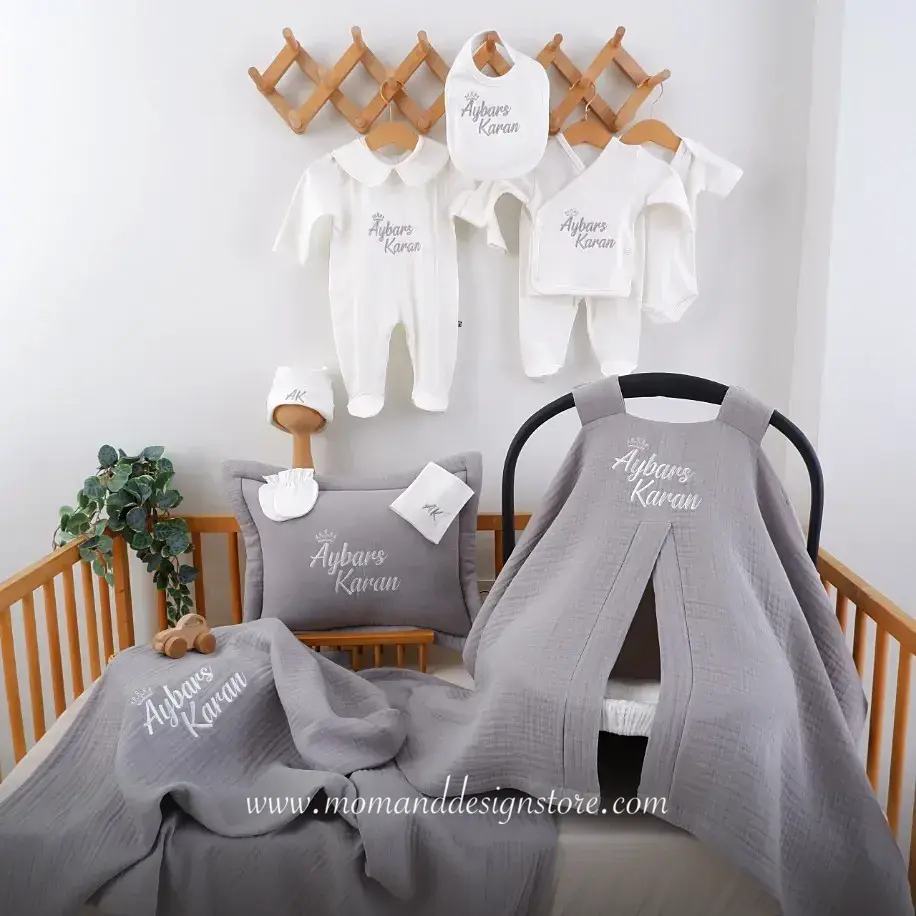
When you order from Mom & Design, your baby's name embroidery, choice of motif, and thread color are sewn directly into each piece free of charge. Bespoke embroidery requires the same thoughtful care as the muslin itself.
During sewing, we use dedicated stabilizer backings beneath the stitches so delicate name scripts stay crisp. When washed at 30 °C, the thread settles into the crinkled muslin naturally, looking like an inseparable part of the heirloom. Name pillows and set accent cushions arrive pre-filled with fiber filling, ready for display; simply spot-clean them or launder on a gentle cycle inside a wash bag when needed. For larger bedding, our quilt covers feature a neat zip closure along the bottom edge, making it effortless to remove the inner fiber filling before wash day.
Every customized piece is crafted individually by hand, meaning no two sets leaving our sewing tables are ever identical. While personalized creations cannot be returned, any atelier or transport imperfection is promptly remade without charge.
Taking the time to wash your four-layer muslin textiles before your little one arrives is a quiet, joyful milestone of nesting. As the water works its gentle magic, you can watch flat cotton bloom into the softest embrace ready to welcome your newborn home.
#cotton muslin care #baby registry essentials #newborn hospital bag #nursery bedding